A leading HR technology company sought to transform its go-to-market platform to better support enterprise sales workflows, improve pipeline management, and boost seller productivity. The existing CRM experience was fragmented across legacy tools, creating friction at every stage of the sales cycle, from lead routing to contract creation, and limiting adoption at scale.
As the sole Product Designer embedded within a cross-functional BCG X team, I partnered with sales, revenue operations, finance, and legal stakeholders to redesign the end-to-end Opportunity-to-Order process. The work spanned future-state process design, AI-first interaction patterns, and an MLP (Minimum Loveable Product) scoped for release across North America and UKI markets.

Sales, RevOps, Finance, Legal, and Operations each had different priorities and definitions of success. Without a common vision, it was difficult to align investments or make product decisions.
Sellers navigated nine opportunity stages, multiple systems, manual approvals, and repetitive data entry, reducing time spent on customer-facing activities.
Years of customization created architectural limitations, requiring solutions that balanced user needs with platform feasibility.
Surface what matters most.
Prioritize decisions over browsing.
Remove unnecessary handoffs.
Balance innovation with feasibility.
Sellers were spending too much time gathering context before taking action.
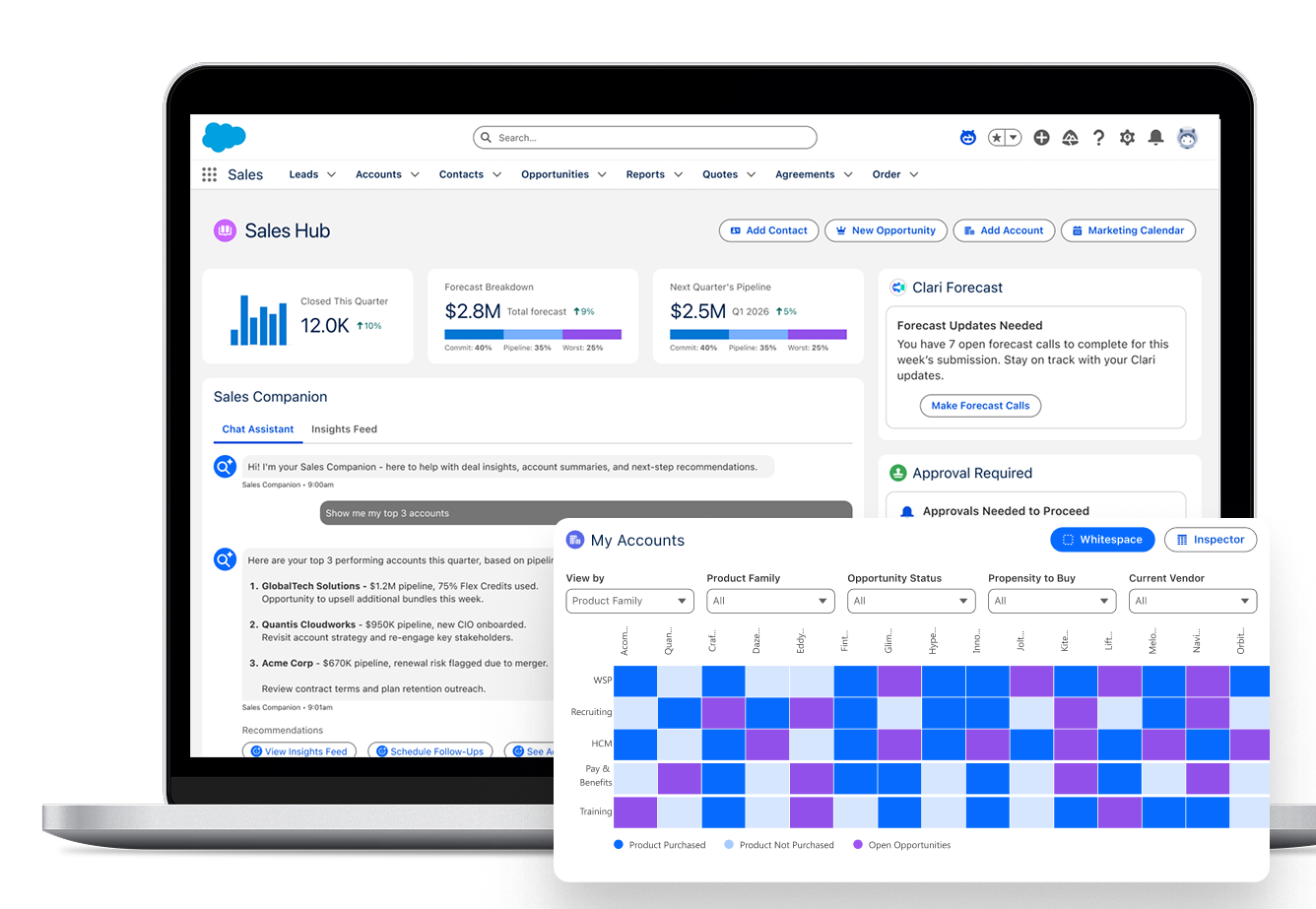
I created a unified workspace that brought forecasts, approvals, whitespace opportunities, and AI recommendations into one place.
Reps could start their day understanding what required attention immediately. Tradeoff: information density vs. simplicity โ I prioritized action-oriented modules and progressive disclosure.
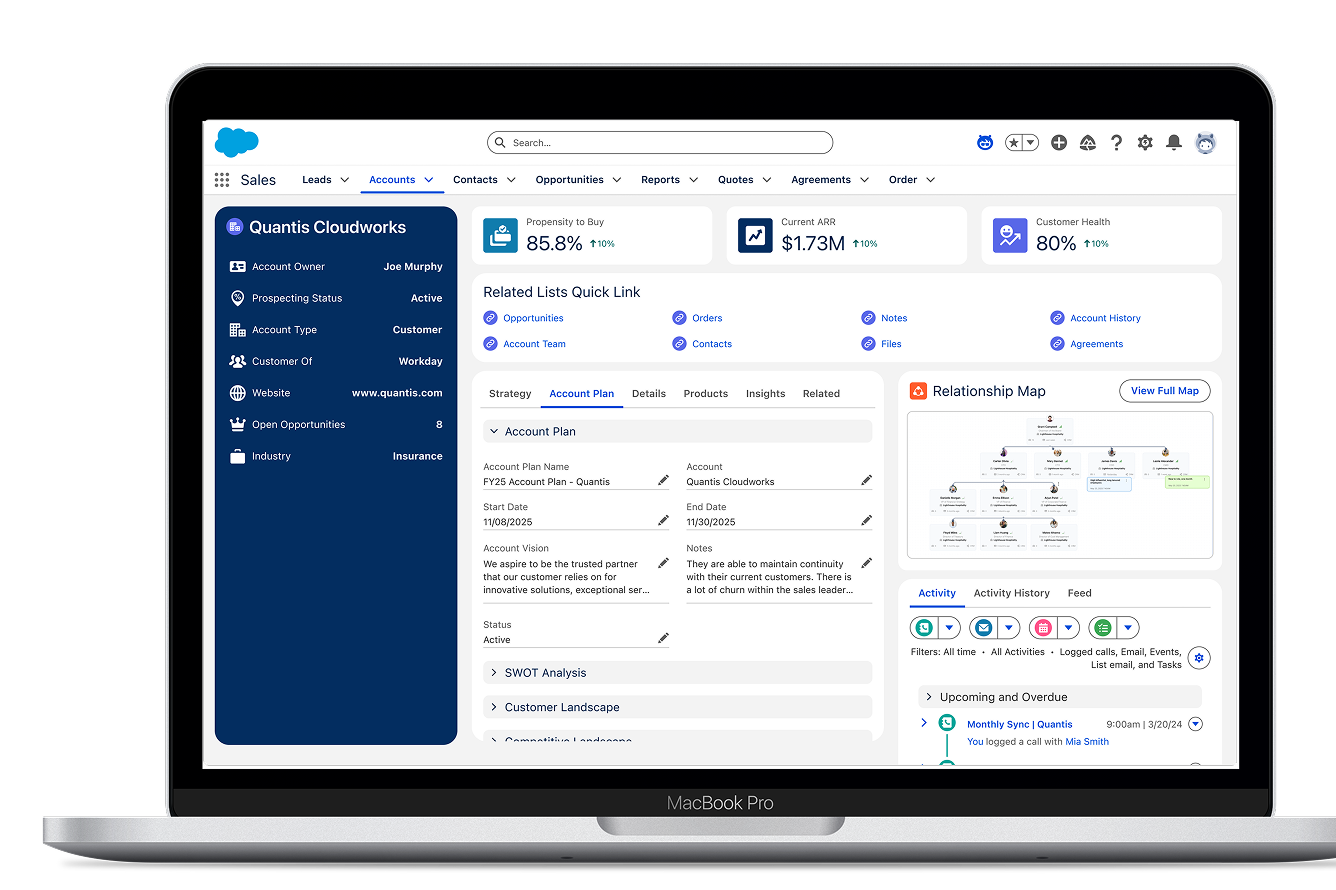
Account information was fragmented across multiple records and systems.
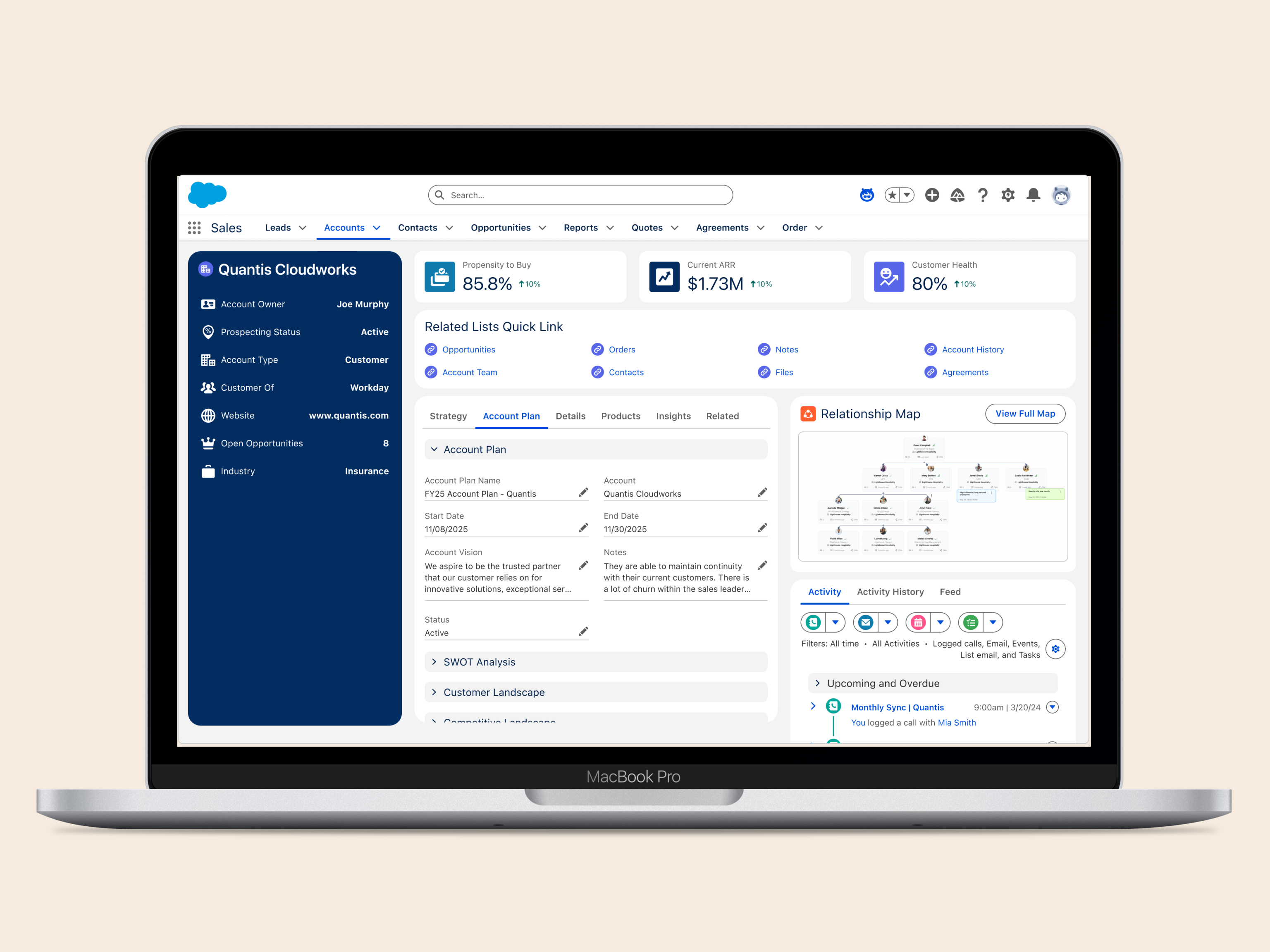
I consolidated KPIs, relationship mapping, activity history, and AI recommendations into a single account workspace.
Reps could understand account health and stakeholder dynamics before engaging customers. Tradeoff: depth vs. clarity โ I relied heavily on hierarchy and modular sections.
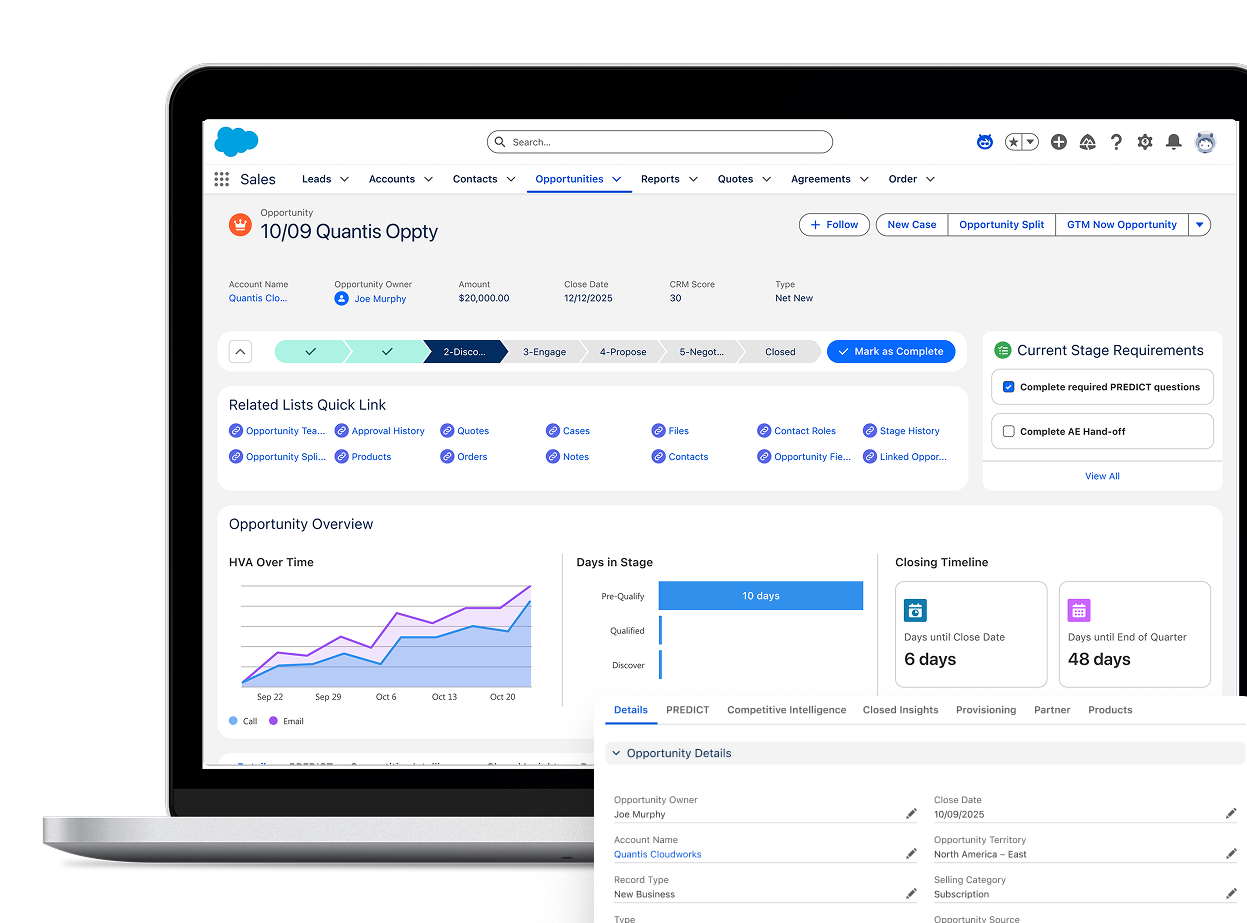
Reps were spending too much time opening records just to understand what to do next.
I focused the experience around prioritization and next-best actions rather than data management.
Reps could quickly triage their pipeline and focus on high-priority opportunities. Tradeoff: completeness vs. efficiency โ I surfaced only the information needed to move a deal forward.
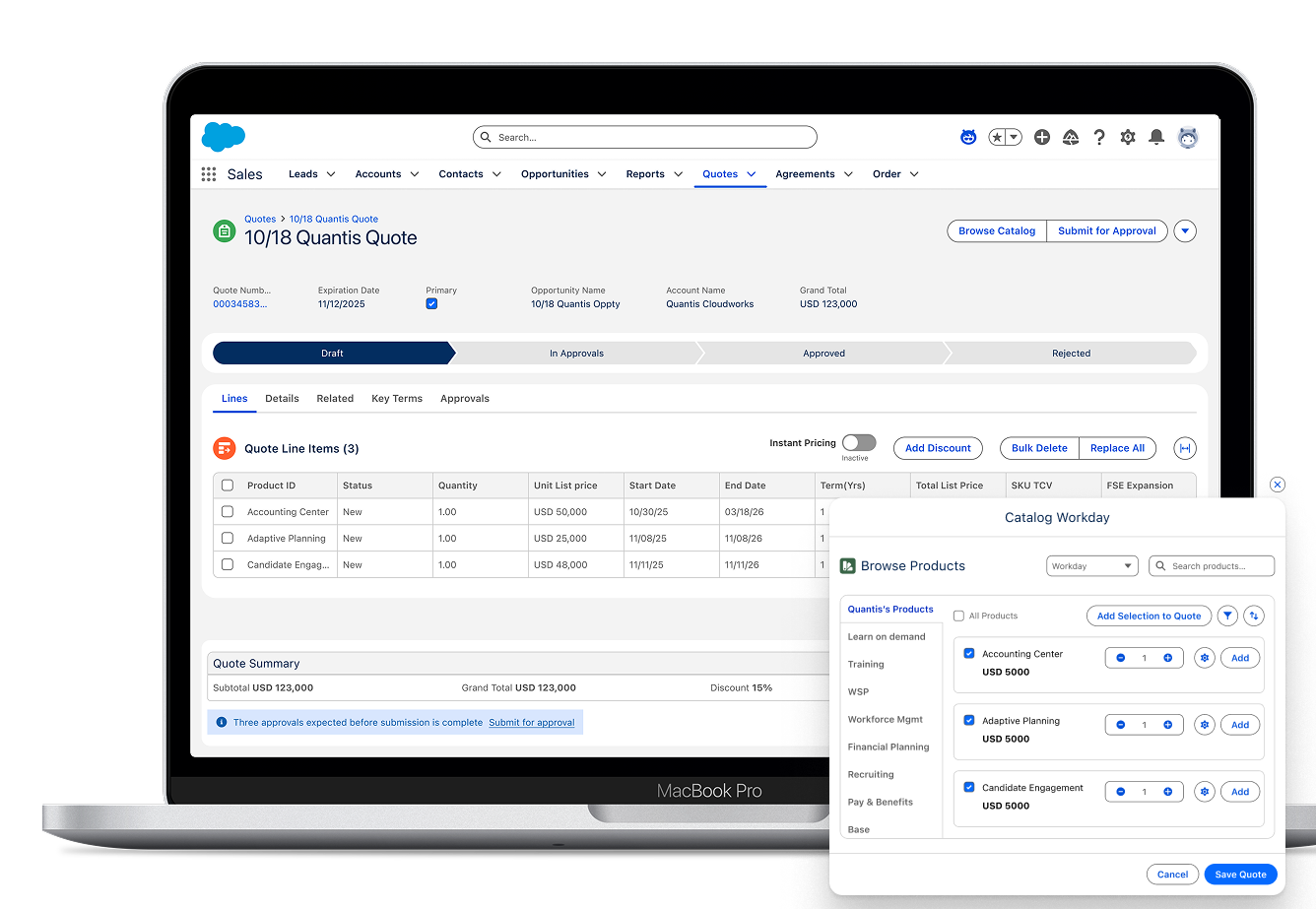
Quote creation required multiple handoffs and created delays.
I designed a guided quote creation workflow directly within Salesforce.
Reps could move from opportunity to quote without leaving the platform. Tradeoff: customization vs. speed โ I optimized for the most common workflows and self-service approvals.
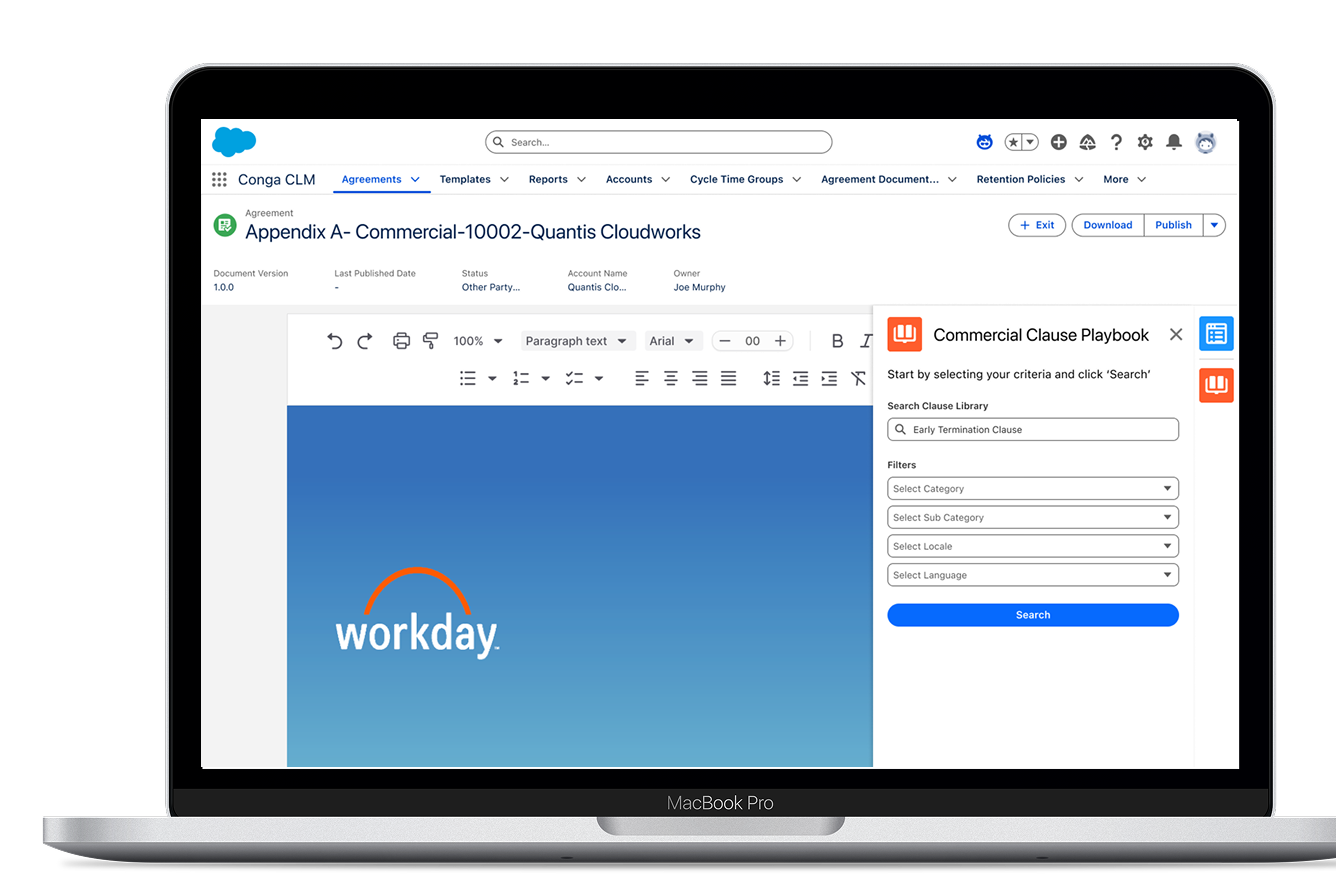
Legal review created bottlenecks for standard contracts.
I introduced a self-service contract workflow using pre-approved templates.
Reduced dependency on legal for routine agreements. Tradeoff: flexibility vs. operational efficiency โ standard agreements could move significantly faster.
Data was repeatedly re-entered across systems after approval.
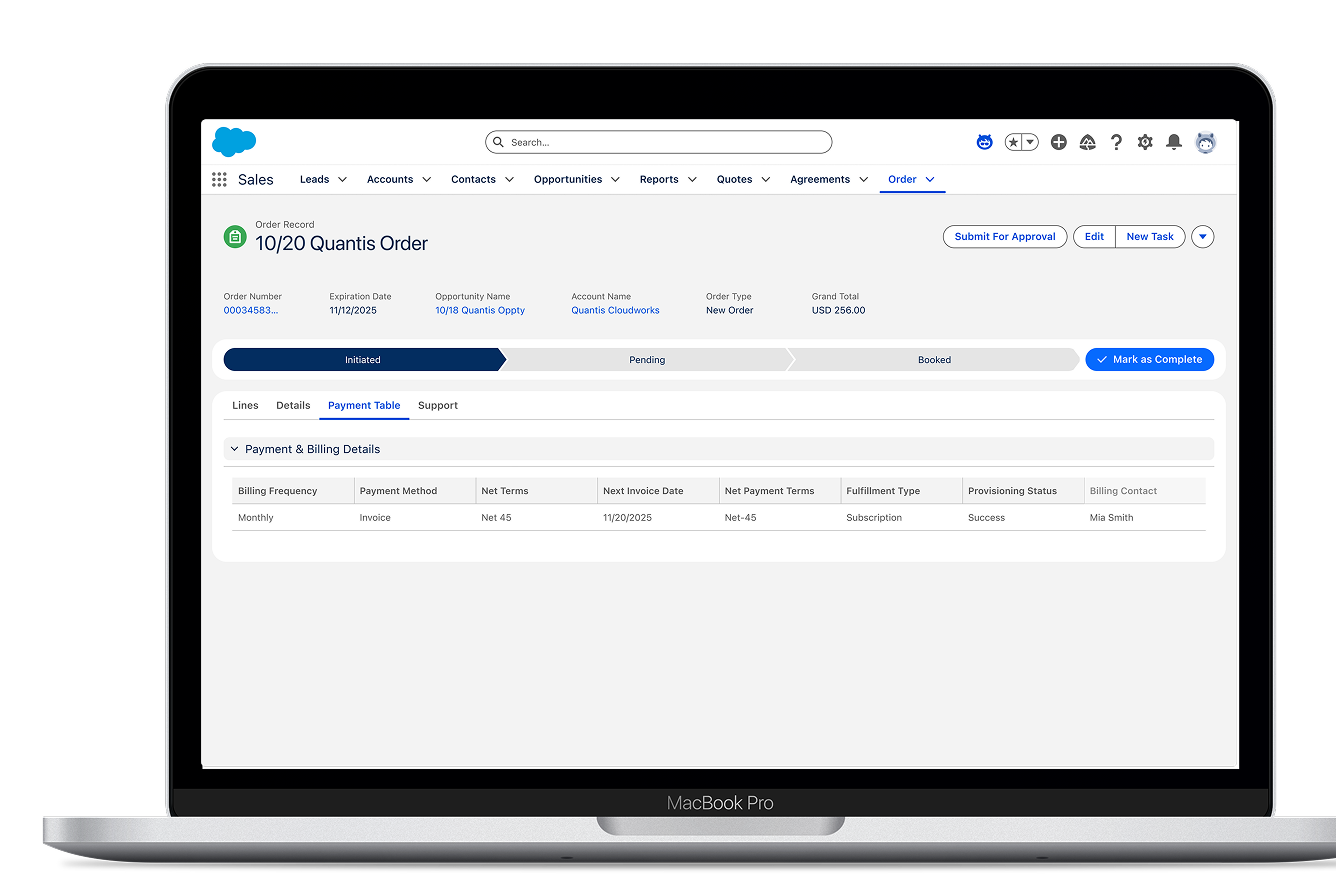
I created a connected workflow that automatically generated order records from approved quotes.
Reduced manual work and created a single source of truth. Tradeoff: implementation complexity vs. user simplicity โ behind the scenes was more challenging, but the UX became dramatically simpler.
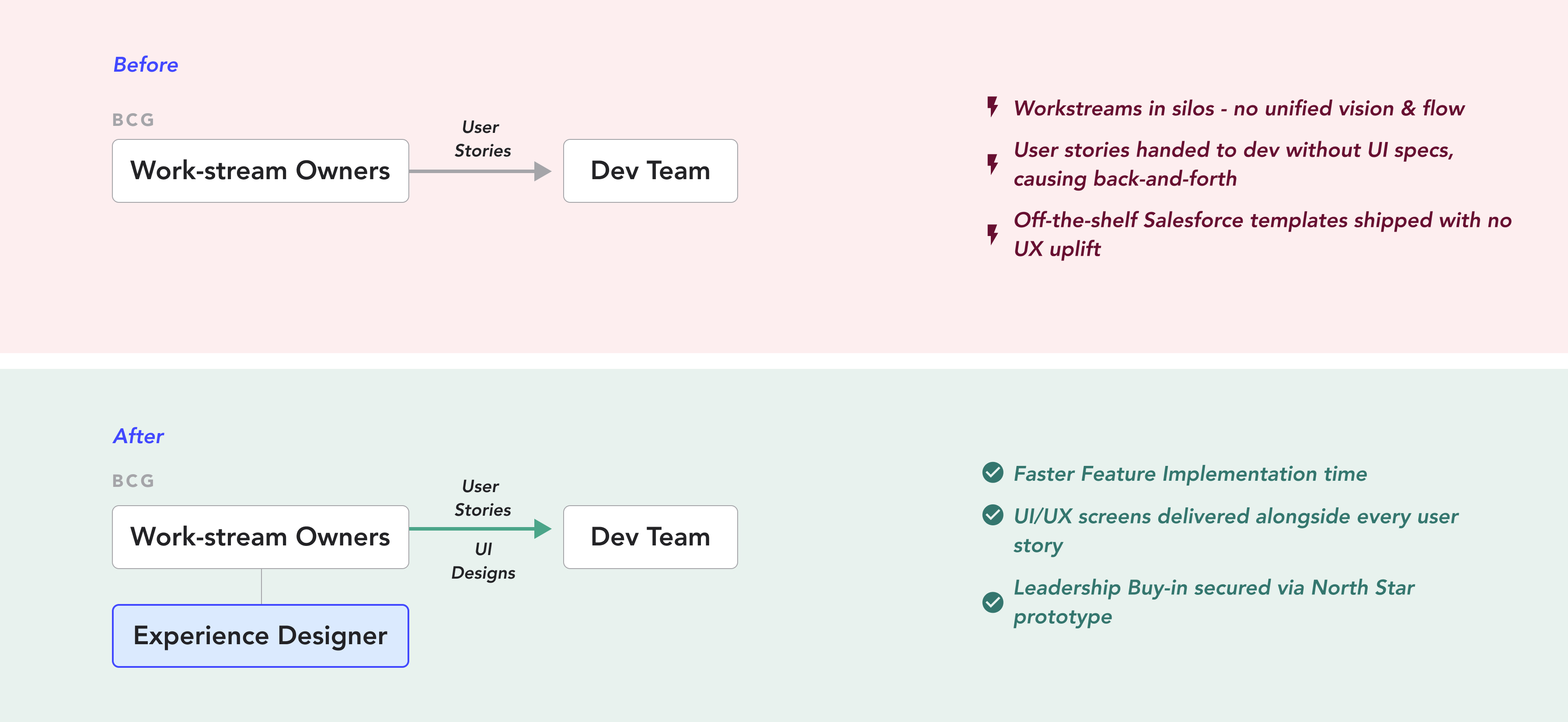
Designing within Salesforce Lightning and delivering UI designs alongside user stories removed the back-and-forth that was slowing the dev team down.
The North Star prototype was presented to the CIO, CFO, and COO โ making the future state visible enough to earn buy-in and unlock the next phase of GTM Next.