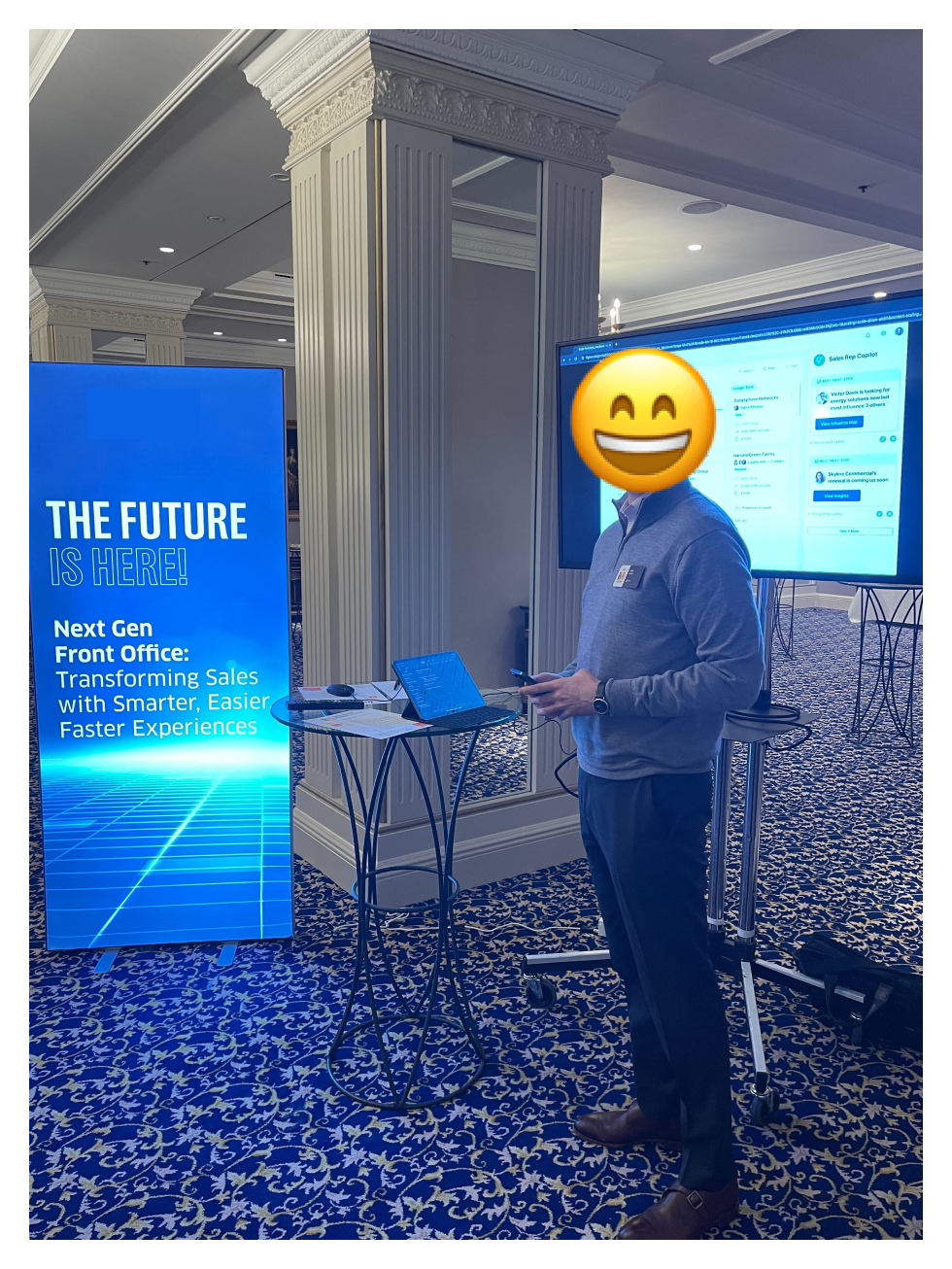
"The response to the prototype today has been amazing. Clients have been so engaged and impressed."
B2B energy sales reps at a major global energy company spent too much time on low-value activities: manually prioritising leads by gut feel, building proposals from scratch, and working without structured coaching. The result was inconsistent performance, slow sales cycles, and lost revenue at scale.
As the Sole Experience Designer embedded in a senior cross-functional team, I owned all design from initial stakeholder workshops through prototype delivery. I spent 3 days personally in the field during live sales training to ground the work in real behavior.
High-value opportunities were regularly missed because reps relied on gut feel rather than signal-based prioritisation.
Reps assembled proposals manually, eating hours that should have been spent with customers.
Top performers' approaches weren't being captured or shared, leaving the rest of the team without a playbook.
Reps had data available, but no guidance on what to do with it next. The gap between information and action was never bridged.
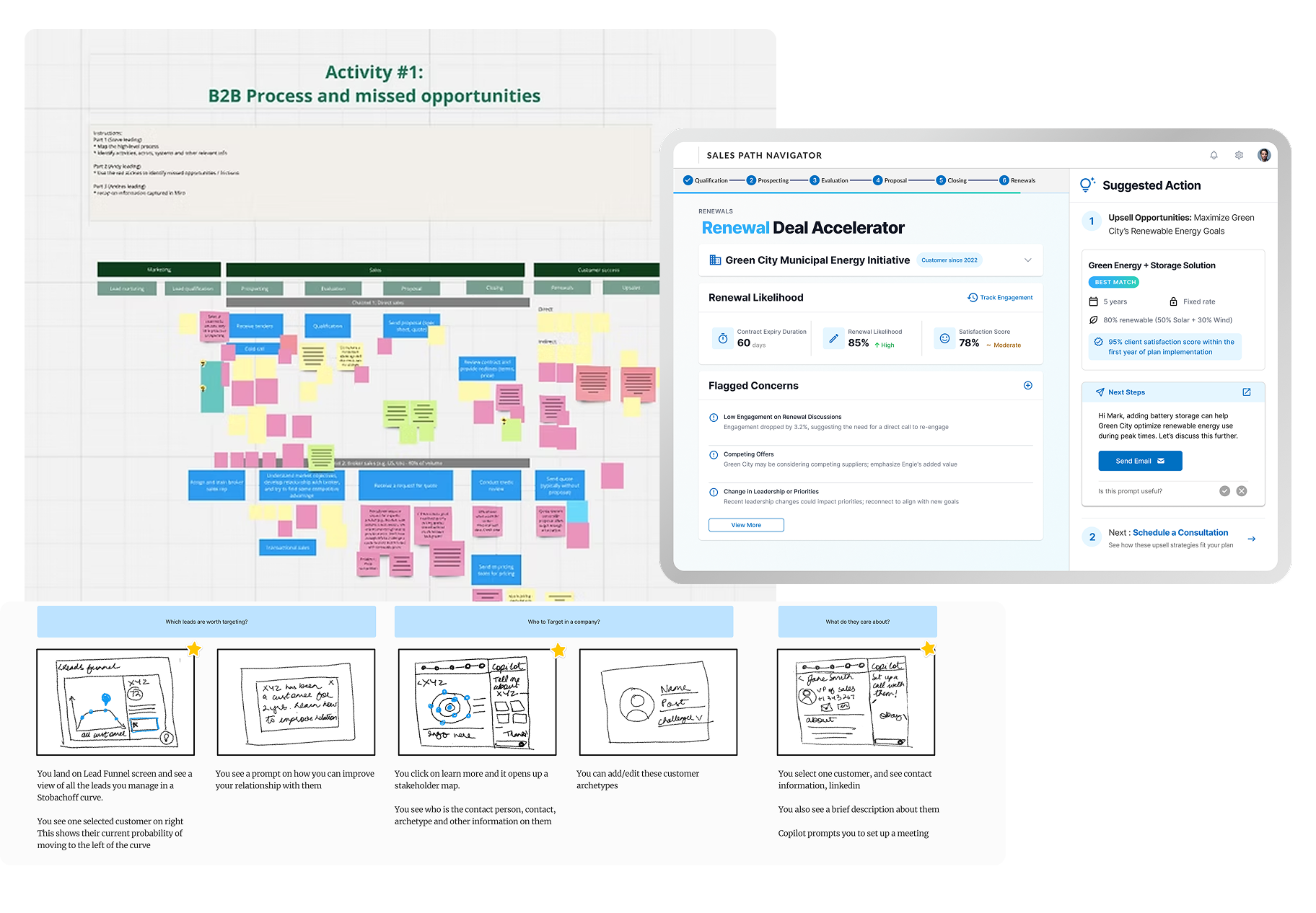
I ran stakeholder workshops with the CEO, senior advisors, and sales leaders to align on business objectives and map the end-to-end sales journey. From those sessions, I identified three structural pain points: inefficient lead prioritisation, lack of structured sales coaching, and time-consuming proposal generation. I developed 10+ initial concept directions and presented wireframes and user flows to refine the vision before any detailed design began.
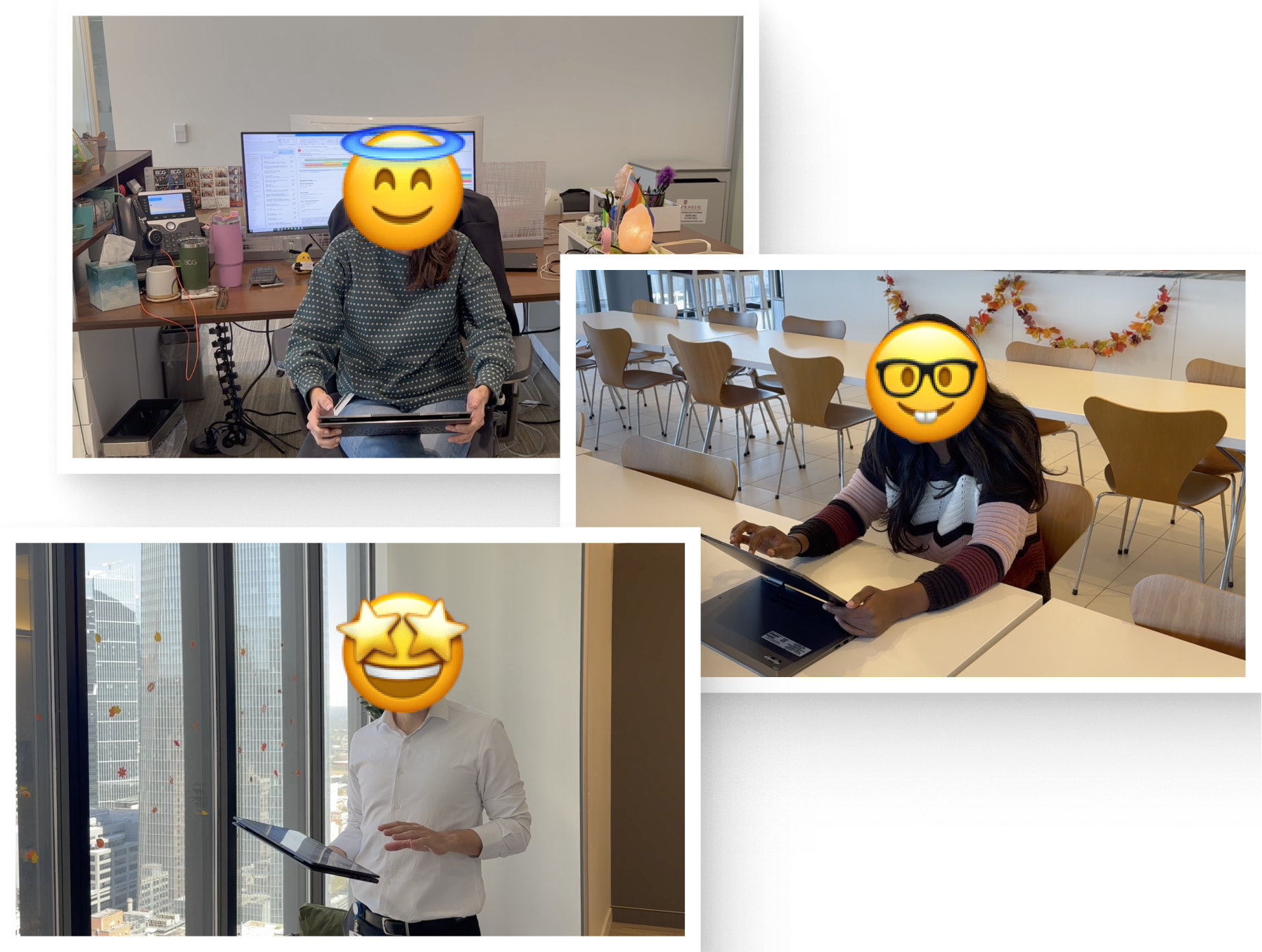
I spent three days personally embedded in the client's live sales training, sitting alongside reps during pitches, observing role-play exercises, and conducting contextual inquiries with sales managers. This wasn't research from a distance. I saw firsthand how reps thought through a lead, where they hesitated, and what they reached for when they needed support.
Back from the field, I iterated the prototype in real time with sales reps and managers, refining the information architecture, decision-support features, and the way AI recommendations were surfaced and explained. Each round of feedback sharpened both the design and the underlying logic of how the tool responded to different deal stages.
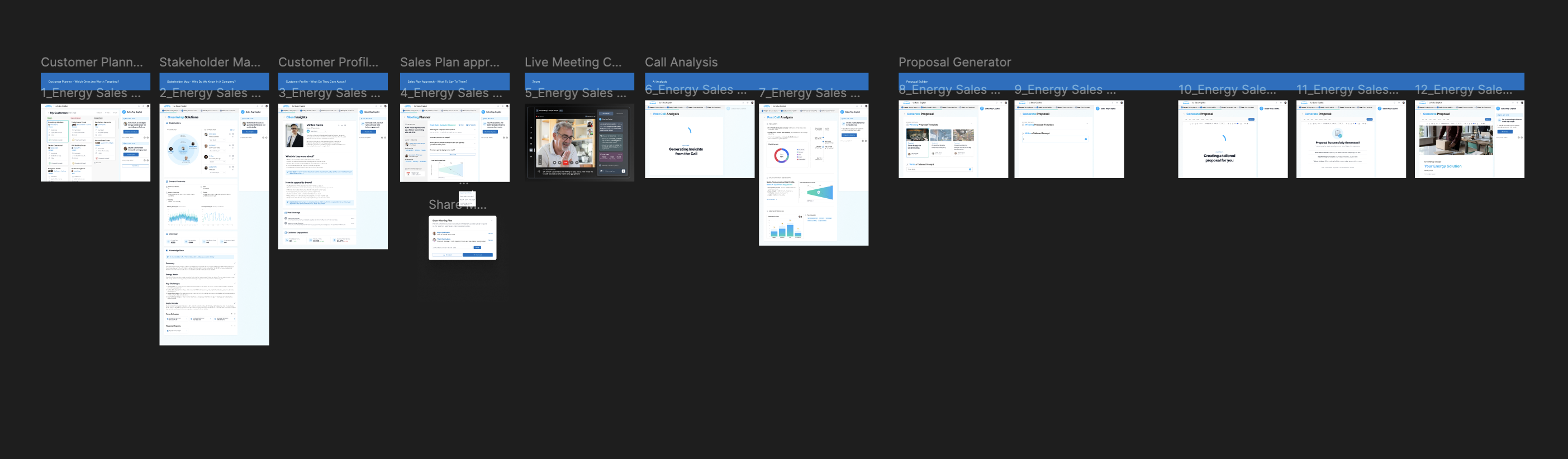
The solution wasn't one screen or one feature. It was a cohesive tool covering the full arc: deep client intelligence before the meeting, live coaching during it, AI-generated proposals after it, and a personalised output that made every pitch feel specific.
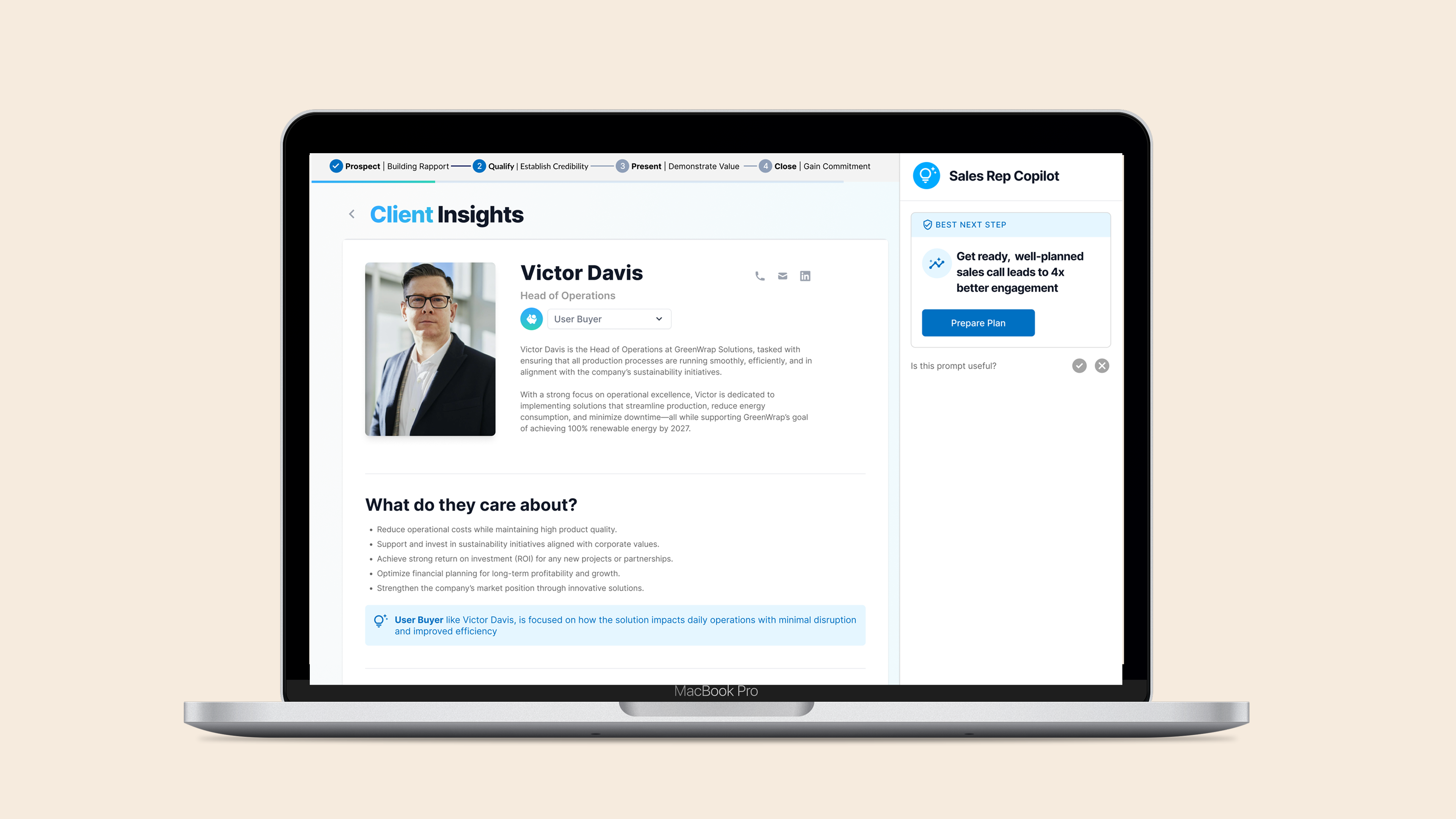
Reps entered meetings relying on memory or scattered CRM notes, often missing key stakeholder context.
Built around the Miller Heiman strategic selling model, this view gave reps a structured picture of each account: key stakeholders, buying influences, relationship strength, and personalised talking points.
Reps entered every conversation with a clear, AI-enriched view of who they were talking to and what mattered most to them. Every pitch felt tailored from the first word.
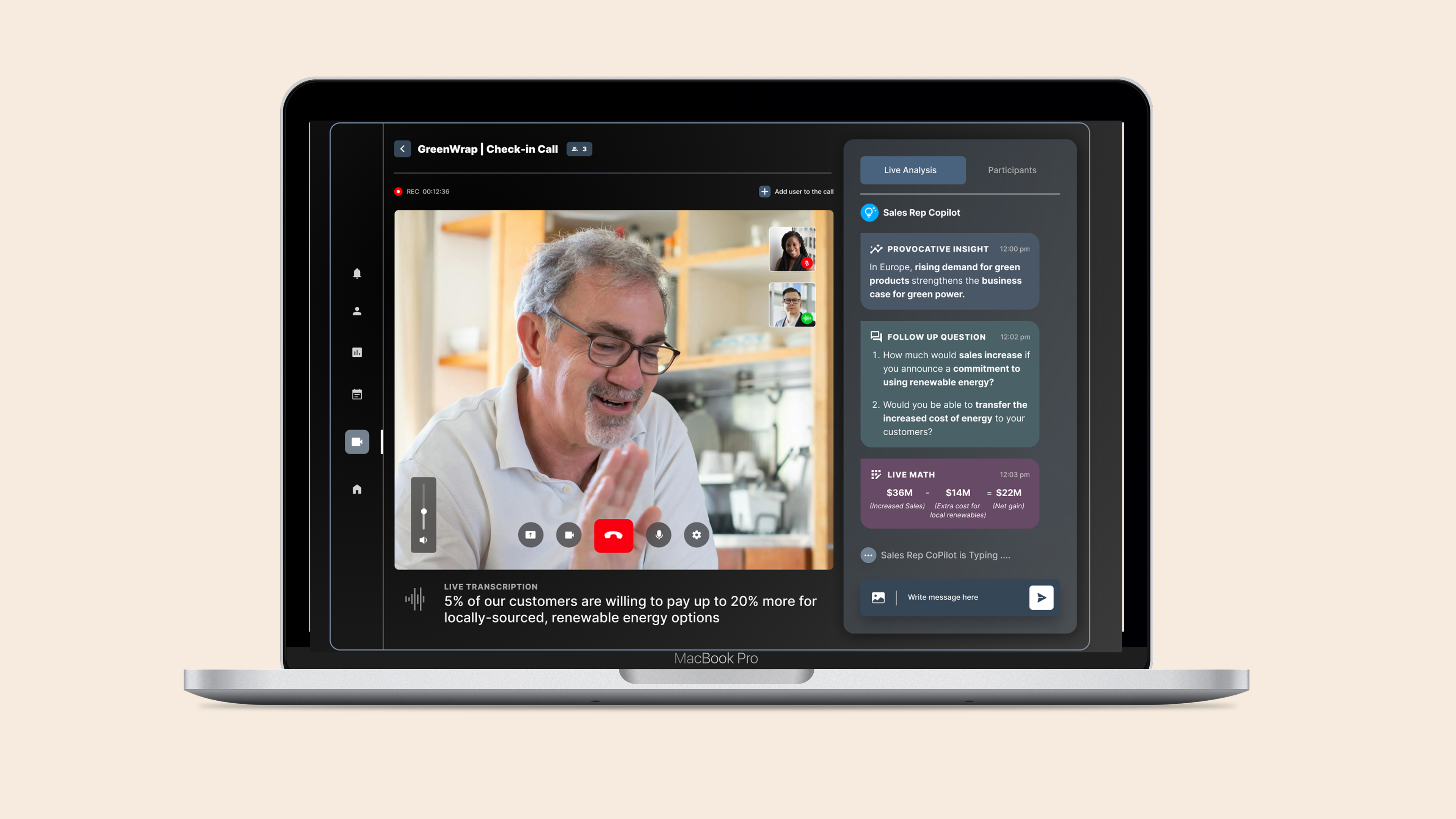
Reps struggled with confidence in the moment, knowing when to push, probe, or pivot during live customer conversations.
During live sales conversations, the tool surfaced contextual follow-up questions, suggested responses to common objections, and ran live pricing and margin calculations on the fly.
Reps stayed fully present in the conversation while the AI worked in the background, flagging the right moment to push, probe, or pivot. Sharper conversations and faster in-meeting decisions.
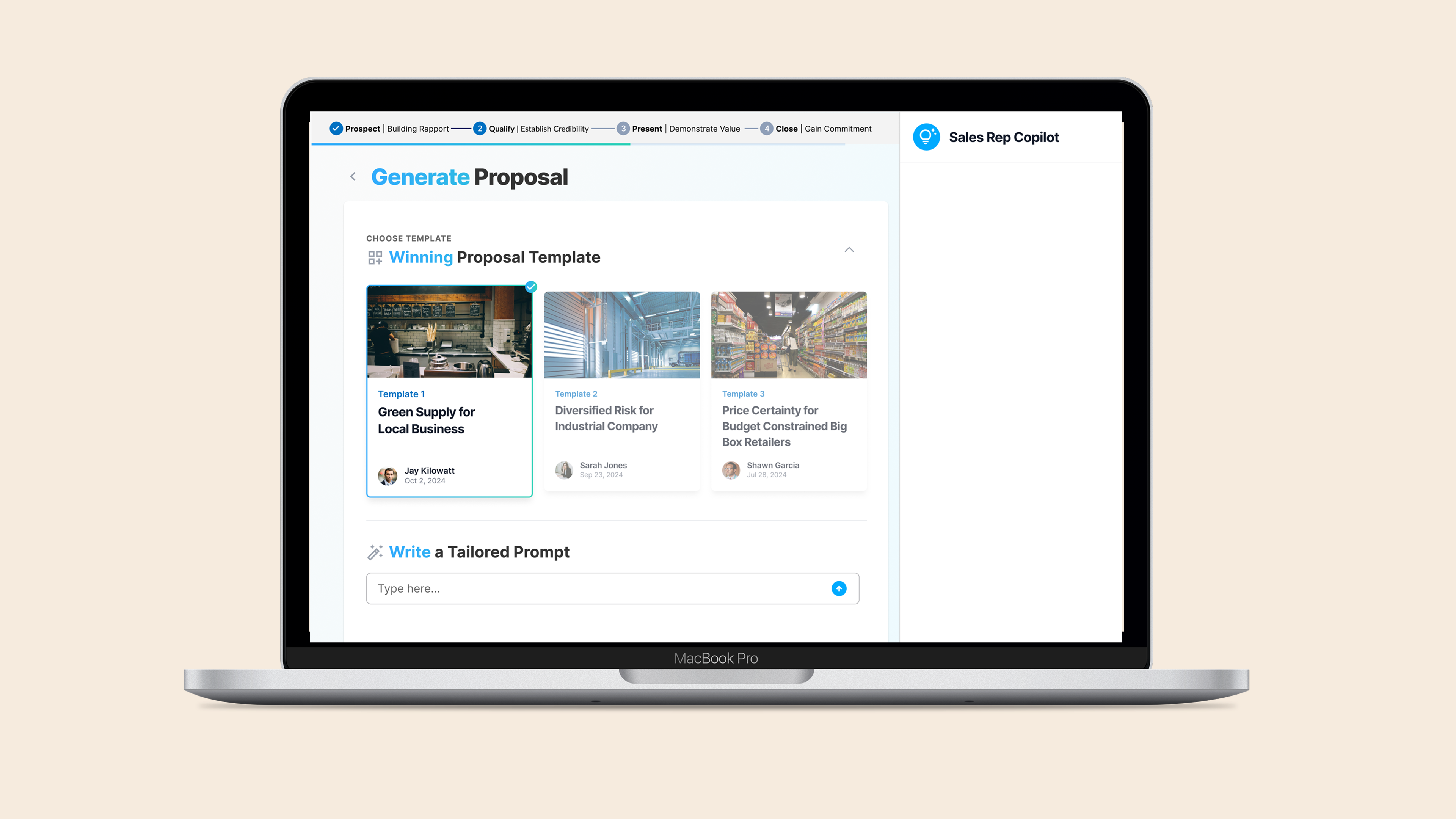
Proposal creation was one of the biggest time drains in the sales cycle. Reps were assembling documents from scratch every time.
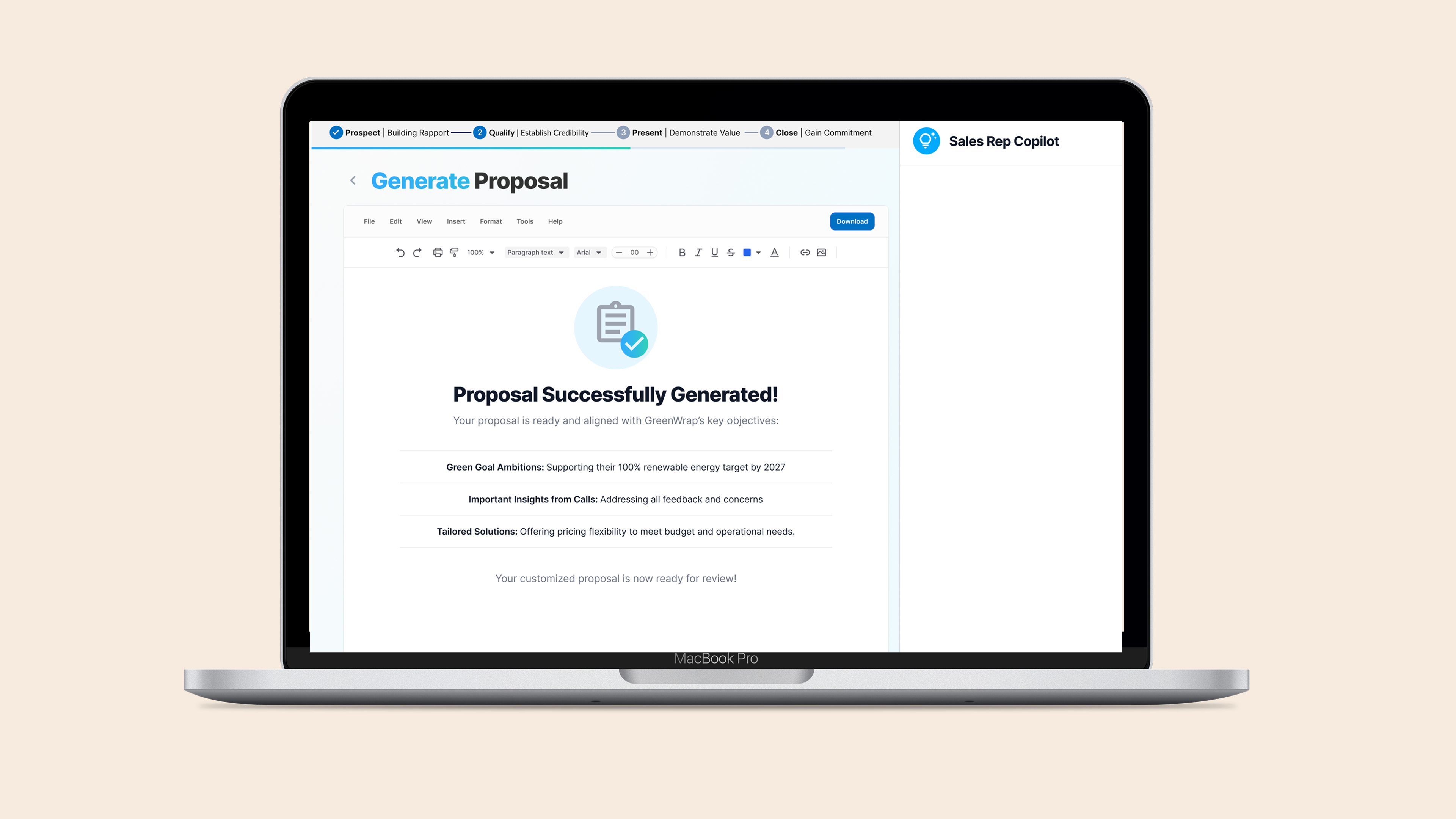
The AI proposal builder pulled from CRM records, pricing engines, and past proposals to generate a structured, accurate first draft, refined rather than built from a blank page.
Time saved per proposal: 85%. Reps reviewed and refined rather than built from scratch, freeing hours back for customer-facing work.
Generic proposals undermined credibility. Customers could tell when something was templated rather than tailored to them.
Each proposal was shaped by the client's specific account data, stakeholder priorities, and deal context, giving reps a document that reflected the actual conversation, not a generic template.
Reps showed up with something credible and specific. The level of personalisation at speed shifted the sales conversation. Pitches felt targeted, not mass-produced.
The final prototype was introduced by the company's CEO at their Annual Sales Conference, the company's most visible internal stage, in front of the top 120+ sales associates and the full leadership board. I had built the prototype; the CEO demoed it live.
The reaction from the room was overwhelmingly positive. Sales reps were immediately engaged. They could see how it would change their day-to-day. Leadership saw the business case land in real time. The feedback after the demo directly shaped the next round of refinements before final implementation.
Additional margin potential through optimised pipeline
Reduction in sales cycle time
Less time spent on proposal creation
Increase in conversion rates
"Designing AI tools isn't just about the intelligence of the system. It's about the confidence it gives the person using it."